
Anxious Dog Training
Join our board and train program to develop healthier habits and grow your relationship with your calmer, more confident dog.
A Dog Trainer For Anxious Dogs—And The People Who Love Them
Some dogs shake when a stranger walks by. Some spend the Fourth of July under the bed, and some rip the apartment apart as soon as the door closes. In our experience, helping an anxious dog thrive comes down to building their inner confidence and establishing a predictable partnership where they can happily defer the decision-making to you.
Dan Perata has been training dogs for more than 35 years. He’s a third-generation San Franciscan who operates from our 12,000-square-foot facility in southeast San Francisco, between Bernal Heights and the Bay.
Dogs are master observers of human body language. Unconscious habits, like eye movements, body language, and a frantic verbal tone, can unintentionally signal to an anxious dog that there is something to fear. By teaching them new ways to learn and learning how you anchor your own physical responses, we teach you how to become the steady, reassuring presence your dogs need to navigate the world confidently.
That’s why we train owners alongside their dogs. In Dan’s words, “A trained dog without a trained owner is usually a temporary fix.”
Signs of Dog Anxiety In San Francisco
The anxious dogs we meet usually show it in a few familiar ways:
- Noise sensitivity: Fireworks, thunder, delivery trucks, or the vacuum that sends your dog into freezing, panting, trembling, or hiding.
- Separation anxiety: Your dog howls, chews, burrows, or damages the house when left alone, sometimes within minutes.
- Fear on walks: Your dog pulls to get away, stops dead on the sidewalk, or scans the street instead of following its person.
- Nervousness at home: The doorbell, visitors, or an unfamiliar sound can keep your dog from settling for hours.
- Rescues with an unknown past: Some dogs arrive already carrying fear from previous trauma and need help finding their footing.
The Bay Area isn’t likely to stop having motorcycles, delivery trucks, fireworks, skateboards, doorbells, or neighbors any time soon. What we aim for is a dog that can hear a motorcycle or a string of firecrackers and decide it isn’t worth reacting to.
Training Dogs With Anxiety: How Our Program Works
Anxiety is a pattern, and patterns take time to change. For that reason, we don’t treat it in one or two private lessons. We often recommend a longer-term Board and Train program, and offer opportunities for owners take part in every stage.
It begins with a free consultation. You’ll meet our trainers, tour the facility, and tell us what you’ve been seeing at home and on walks. Together we’ll identify your dog’s triggers and put together a plan for your dog and your household.
For our board-and-train, affectionately called Dan Camp, your dog trains with us Monday through Friday and comes home on weekends. The program runs four to six weeks, which is about how long a new habit takes to form.
Everything starts with the walk. “Relax and keep moving” is one of Dan’s favorite sayings. Dan’s approach starts with movement. He has found that keeping a dog moving can interrupt the stop-and-fixate pattern that often comes before a reaction. A calm, structured walk is the first tool we give an anxious dog and the first skill we teach its owner.
- The Box is our patent-pending, motion-based training system. Inside it, we play virtual versions of common triggers—fireworks, barking dogs, skateboards, the vacuum—at a level the dog can handle while it keeps moving. With repetition, the scary sounds gradually lose their hold.
- Then we practice in the real city. We take dogs onto San Francisco streets for structured exposure to people, other dogs, traffic, and noise.
We teach your dog how to be confident by itself. Many anxious dogs never learned to settle without someone nearby. We call the crate the dog’s bed, and we treat it as a place where nothing is expected of the dog. There, it learns that being alone doesn’t mean being unsafe.
You’ll have homework. On weekends, you practice at home and tell us what went well and what didn’t. That feedback helps us adjust your pup’s care plan.
Support continues after graduation. Follow-up lessons are included in the program price. After that, group classes, Zoom sessions, and continuation weeks are available. Our commitment lasts for the life of your dog.
No Treats, No Pain
Dan doesn’t use either. He says. “There’s a middle ground, and that’s where real communication happens.”
For an anxious dog, the reasoning is fairly simple. A treat can distract a frightened dog for a moment, but it doesn’t change how the dog feels about what frightened it, and a real scare will usually beat a biscuit during a stressful time. Punishment adds fear to a dog that already has more fear than it can handle.
Dan calls this neutral association: teaching a dog to stay calm and engaged without relying on fear or food. Love and praise still matter a lot! They just come at a time when the dog is calm, so being calm becomes the factor that earns attention and reward. Over time, the dog starts looking to its person to be the calm, confident decisionmaker before it reacts, because their person has shown, again and again, that they’ll handle whatever comes next.
What To Do When Your Dog Is Frightened
Dan’s advice for the next loud night may feel counterintuitive: do less. Make less eye contact, talk less, and touch less. Stay relaxed and go about your evening. If your dog freezes, get it moving: walk to the kitchen, walk back, sit down for a minute, then take another lap. If it heads under the bed, calmly bring it back out and keep it with you, on a loose leash if you need to.
He also suggests practicing ahead of time. Let a pot lid drop to the kitchen floor, then pick it up without looking at or speaking to your dog. The first time, your dog may jump. By the fifth or sixth time, it may walk over, sniff the lid, and go back to what it was doing. Dan explains more in his post on fireworks and fear.
STARTING AT
$3500
Evaluation is Needed
SESSIONS IN THE BOX ARE AVAILABLE IN FOUR-PACKS FOR $500. SCHOLARSHIPS AND DISCOUNTED RATES ARE AVAILABLE ON REQUEST. WE DO OUR BEST TO HELP EVERYONE WHO WALKS THROUGH OUR DOOR.
Stories From Our Clients
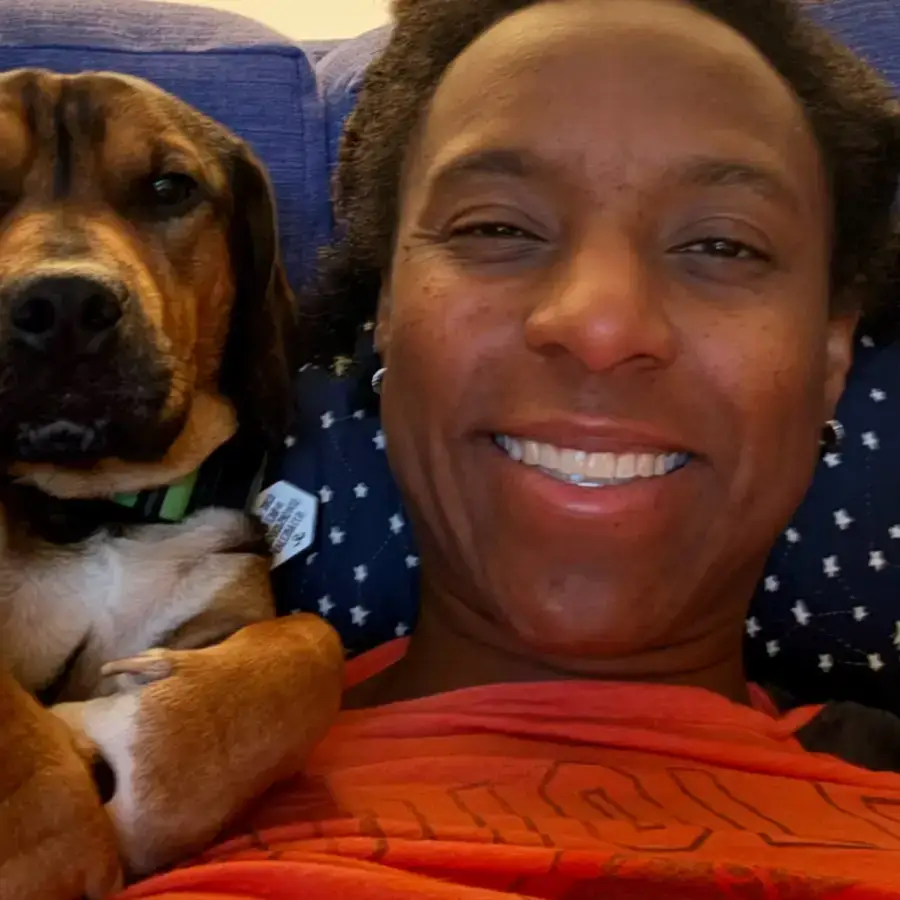
Lauren’s dachshund–pit bull mix, Leo, came to us with separation anxiety that showed up as counter-surfing and chewed belongings. She chose our four-week Board and Train specifically because it let her have Leo home on weekends. Within a month, he was bringing her toys, greeting visitors, and playing with the family’s older dog. “It gave me confidence,” Lauren says, “and it gave him calm.” Read Leo’s story.
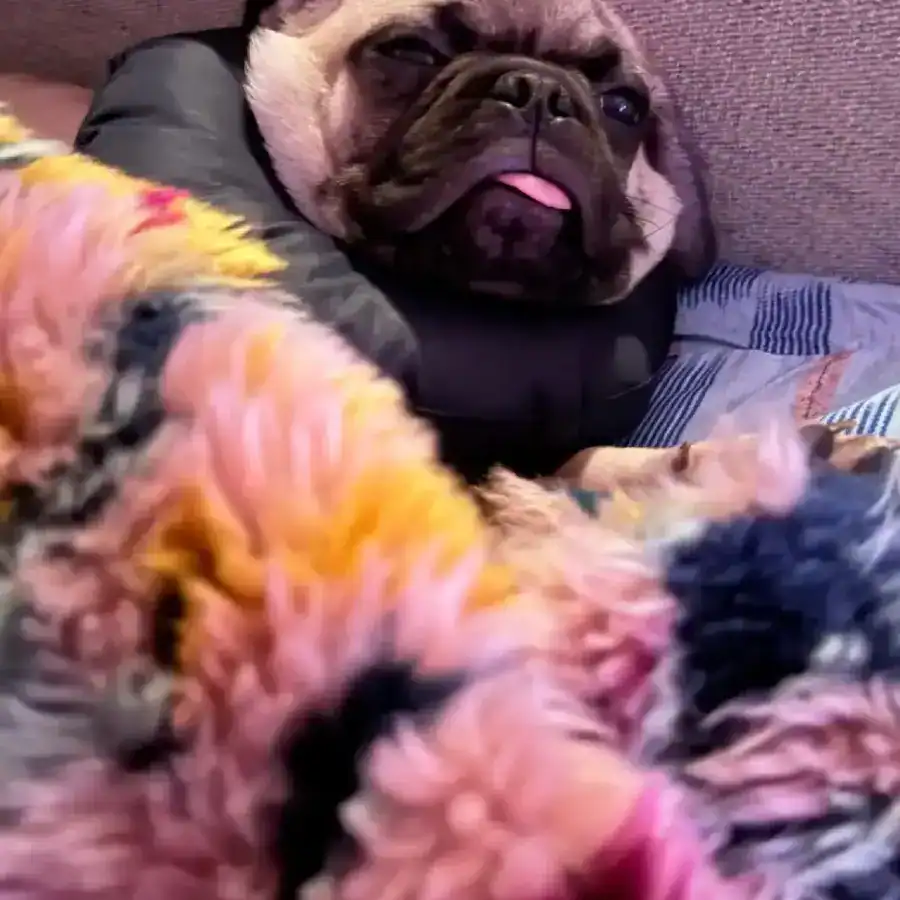
Geneviève’s previous rescue had arrived with deep separation anxiety, and over time she absorbed much of it herself. With her new puppy, Artie, she wanted a different outcome. By the end of the program, she no longer dreaded leaving the apartment and had stopped checking the cameras. Read Geneviève and Artie’s story.
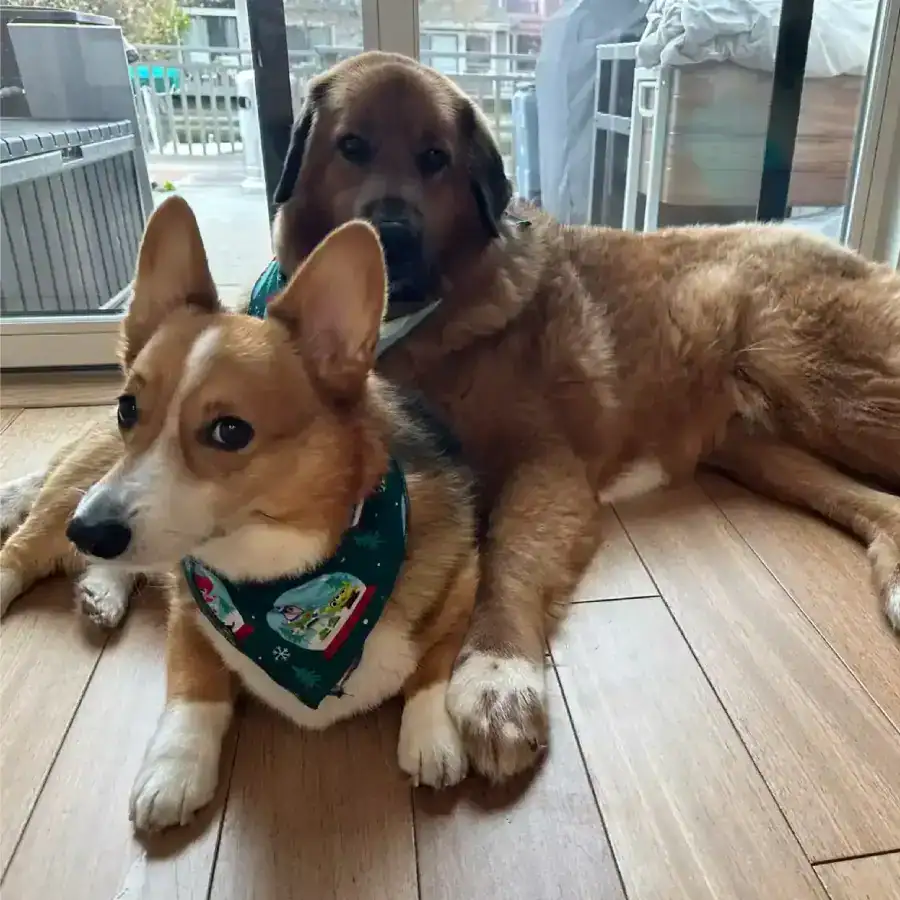
Annie and Pablo’s Tibetan Mastiff, Clifford, had what Pablo describes as “a lot of big reactions to the world around him.” Practicing doorbells and visitors in The Box, where the stakes were low, helped him face those same moments at home. Read Annie and Pablo’s story.
Frequently Asked Questions About Anxious Dog Training
Can you help an anxious rescue, a puppy, or an older dog?
Yes. Dogs can learn at any age with clear, consistent communication. We've worked with young pups who are eager to learn all the way to mature rescues whose histories were among the hardest we've seen.
How long does anxious dog training take?
Our Board and Train programs can last from four to six weeks or longer, with four weeks as the minimum. From there, your pet’s progress depends on consistent practice at home, and we stay involved through follow-ups and classes.
Is anxious dog training the same as reactive dog training?
They overlap, and many of the same tools help caring for both anxius and reactive dogs. Broadly, a fearful dog wants to get away from its trigger, while a reactive dog tends to go toward it.
Does my anxious dog need medication?
If your dog's anxiety has appeared suddenly, have your vet rule out pain or illness first. Some anxious dogs come to us already on behavioral medication. Decisions about medication belong to you and your veterinarian. Our role is different: we focus on the habits, communication, movement, and confidence-building that training can address.
Will my anxious dog be stressed staying with you during the week?
Your dog comes home every weekend, and its weekdays follow a calm, structured routine .
Where are you located?
We're at 80 Elmira St, San Francisco, CA 94124, in southeast SF between Bernal Heights and the Bay. We're close to the major freeways, with plenty of parking.
Looking for a Trainer for an Anxious Dog? Dan Perata & Team Can Help!
If your dog is struggling with fearfulness, noise avoidance, or anxiety caused by time alone, we’d be glad to meet you both. Call (415) 373-0889 or email fetch@danperata.com to book a free consultation, tour the facility, and talk through behaviors you’ve been seeing.