
Reactive & Aggressive Dog Training
Learn strategies alongside Dan Perata Training to best support your pet’s reaction to stress at our board and train program.
“Aggressive” Dog?—Your Trainer Can Help Manage Reactivity
Nobody uses the word “aggressive” about their own dog lightly.
More than three decades of dog training experience has taught us that most dogs who arrive carrying the “aggressive” label are truly reactive. Your dog is not setting out to do harm. Instead, it is using antisocial behaviors to make something they don’t like go away.
By the time most people call us, they have experienced a stressful trip, a close call, or difficulty around others or in public—behaviors that could be dangerous for their beloved pet or other people and animals, and it needs to be taken seriously.
Dan Perata has been training dogs for more than 35 years. He’s a third-generation San Franciscan who operates from our 12,000-square-foot facility in southeast San Francisco. He learned early that when it comes to reactive behaviors in dogs, the best way to handle it is by reacting appropriately, learning commands, and building mutual respect.
“If you treat your dog like a human, it will treat you like a dog,” Dan says. “If you treat your dog like a dog, it will treat you like a human.”
That’s why we train owners alongside their dogs. A reactive dog is usually a dog that has decided, often reasonably, that nobody else is making the decisions. Our job is to give that job back to you, and to prove to your dog that you’re good at it.
Signs of Dog Aggression In San Francisco
The reactive dogs we meet usually show it in a few familiar ways:
- Lunging and barking on leash: Your dog spots another dog a block away and the walk is over. You start crossing streets, timing outings for off-hours, and scanning ahead instead of walking.
- Guarding: Food bowls, bones, toys, the couch, a doorway, or a person. The dog stiffens, freezes, or escalates when someone comes near what it has claimed.
- Dog-to-dog conflict: Trouble at the dog park, at daycare, in the elevator, or with another dog already living in the house.
- Territorial reactions at home: This includes incontinence, barking, or aggressive behaviors at the doorbell, the mail carrier, a delivery on the stoop, or a guest.
- Redirecting onto the leash or the handler: When the dog can’t reach what it’s reacting to, it grabs the leash, spins, or puts teeth on an arm or sleeve.
- A bite history, or a close call.
Dog Training for Aggressive Dogs: How Our Program Works
Regressive behaviors are part of a pattern, and patterns take time to change. For that reason, we don’t treat it in one or two private lessons. We often recommend a longer-term Board and Train program and offer opportunities for owners take part in every stage.
It begins with a free consultation. You’ll meet our trainers, tour the facility, and tell us what you’ve been seeing at home and on walks. Together we’ll identify your dog’s triggers and put together a plan for your dog and your household.
For our board-and-train, affectionately called Dan Camp, your dog trains with us Monday through Friday and comes home on weekends. The program runs four to six weeks, with free follow-up as needed after you graduate.
Everything starts with the walk. “Relax and keep moving” is one of Dan’s favorite sayings. A calm, structured walk is the first tool we give an anxious dog and the first skill we teach its owner. Most reactions begin the same way: the dog stops, locks on, and tightens the leash. A taut leash tells your dog two things—that you’re not the one deciding, and that it can’t get away. From there it has one option left, and it takes it. Movement interrupts that sequence before it starts. A calm, structured walk is the first tool we give a reactive dog and the first skill we teach its owner.
- The Box is our patent-pending, motion-based training system. Inside it, we play virtual versions of common triggers—fireworks, barking dogs, skateboards, the vacuum—at a level the dog can handle while it keeps moving. With repetition, the scary sounds gradually lose their hold.
- Then we practice in the real city. We take dogs onto San Francisco streets for structured exposure to people, other dogs, traffic, and noise.
We teach your dog how to be off duty. A lot of reactive dogs never learned to stop being vigilant. We call the crate the dog’s bed, and we treat it as a place where nothing is expected and nothing needs guarding. A dog that can genuinely rest has more room before it reacts.
You’ll have homework. On weekends, you practice at home and tell us what went well and what didn’t. That feedback helps us adjust your pup’s care plan.
Support continues after graduation. Follow-up lessons are included in the program price. After that, group classes, Zoom sessions, and continuation weeks are available. Our commitment lasts for the life of your dog.
No Treats, No Pain
Dan doesn’t use either. He says, “There’s a middle ground, and that’s where real communication happens.”
With a reactive dog, offer it a biscuit and watch it ignore you. A dog over its stress threshold isn’t interested in food. Food can also create a problem where there wasn’t one for a dog that already guards.
Punishment is the more serious risk, because noises and growls are information. It’s your dog telling you, clearly, that it has reached its limit. Correct a dog hard enough for growling and it will not stop feeling what made it growl. You’ve removed the warning and kept the stress that leads to a bite.
Dan calls the alternative neutral association: teaching a dog to stay calm and engaged without leaning on fear or food. Love and praise still matter enormously. They arrive when the dog is calm, so calm becomes the thing that earns attention. Over time the dog starts checking in with its person before it reacts, because that person has shown, again and again, that they’ll handle whatever comes next.
STARTING AT
$3500
Evaluation is Needed
SESSIONS IN THE BOX ARE AVAILABLE IN FOUR-PACKS FOR $500. SCHOLARSHIPS AND DISCOUNTED RATES ARE AVAILABLE ON REQUEST. WE DO OUR BEST TO HELP EVERYONE WHO WALKS THROUGH OUR DOOR.
Stories From Our Clients
Watch Jennifer and Tim’s session with Dan
Jennifer and Tim’s Tibetan Mastiff, Louie, had been living crated because they were afraid he would bite someone. “We almost had to put Louie down,” Jennifer says. They couldn’t have anyone in their home—not friends, not their own children. After a day and a half with Dan, working on timing, tone, and walking together, they were comfortably in the same room as a stranger. “It’s literally miraculous,” Jennifer says.
MORE CLIENT STORIES
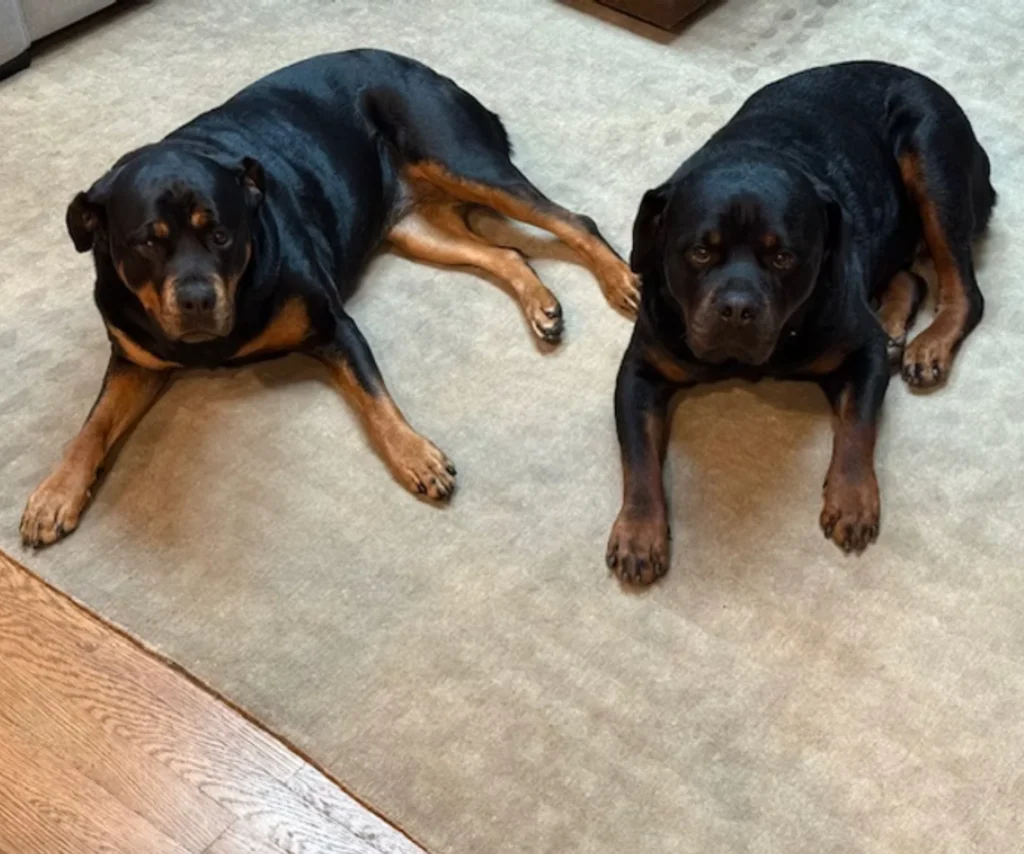
Morinne and Corey came to us with two large rottweilers, Chilli and Ember, who were experiencing some trouble getting along. Training helped them with. managing aggressive behaviors. Now, they have a more harmonious life together. Read Morinne, Corey, Chilli, and Ember’s story.
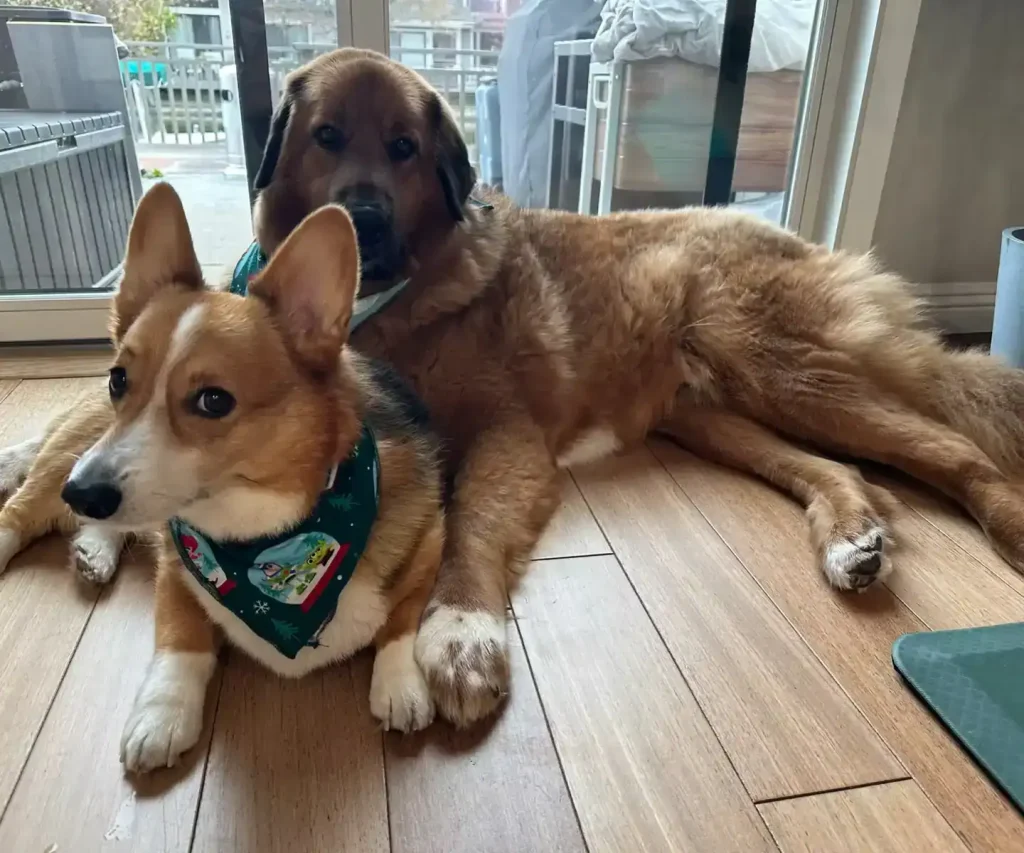
Annie and Pablo’s Tibetan Mastiff, Clifford, had what Pablo describes as “a lot of big reactions to the world around him.” Practicing doorbells and visitors in The Box, where the stakes were low, helped him face those same moments at home—and gave Annie and Pablo something to do besides brace for his big reactions. Read Annie and Pablo’s story.
Frequently Asked Questions About Anxious Dog Training
Is my dog aggressive or reactive?
Broadly, a reactive dog is responding (sometimes aggressively) to something it doesn’t want near it.
Will you take a dog with a bite history?
We want to hear about it. Bring it up in the consultation and be specific about what happened, how many times, and how bad it was. We’ll tell you honestly whether we think we can help.
Can an aggressive dog be fixed?
A reactive dog can become a dog that learns to manage its triggers with your guidance. You’ll still make the calls. The difference is you’ll know how to manage, and your dog will be looking for you to help.
How long does reactive dog training take?
Board and Train runs four to six weeks or longer. If your dog needs a little guidance, with our follow-up care, we’re on your team for years to come.
Do you use e-collars or prong collars?
No
My vet suggested medication. Should I?
If the behavior appeared suddenly, have your vet rule out pain or illness first. A dog that hurts will often defend itself aggressively. Decisions about medication belong to you and your veterinarian. Instead, we work on habits, communication, movement, and confidence. Dan has written about what he’s seen on this in his post on the over-medication of dogs.
Will my reactive dog be around other dogs at your facility?
Everything here is training-based, including boarding and daycare, and dogs are introduced to each other deliberately rather than turned loose together.
Where are you located?
We’re at 80 Elmira St, San Francisco, CA 94124, in southeast SF between Bernal Heights and the Bay. We’re close to the major freeways, with plenty of parking.
Looking for a Trainer for an Anxious Dog? Dan Perata & Team Can Help!
If your dog is struggling with reactivity, aggression, or guarding towards other people or other pets , we’d be glad to meet you both. Call (415) 373-0889 or email fetch@danperata.com to book a free consultation, tour the facility, and talk through behaviors you’ve been seeing.